By Sharachchandra Bhandary------
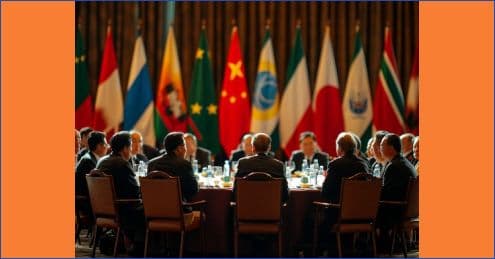
At a time when geopolitical rivalries are intensifying, regional conflicts are deepening and the foundations of the international order are under growing strain, a meeting of the leaders of China, the United States and Russia carries significance far beyond the diplomatic event itself. Their gathering in Shenzhen on November 19 presents a rare opportunity for three major powers to address their differences, discuss shared global challenges and consider their responsibilities in shaping the future of international relations.
The planned meeting between Chinese President Xi Jinping, US President Donald Trump and Russian President Vladimir Putin is unprecedented in its format. Although the three leaders have engaged with one another through bilateral meetings and diplomatic channels, bringing them together at a single table marks a significant development in contemporary major-power diplomacy. The Chinese Foreign Ministry has described the meeting as having groundbreaking significance, particularly in terms of safeguarding world peace and promoting strategic stability in relations among major powers.
The timing is particularly important. The world is passing through a period of profound geopolitical uncertainty. Strategic rivalry, regional wars, economic fragmentation, competing security interests and declining confidence in multilateral institutions have placed the existing international order under considerable strain. Against this backdrop, direct engagement among Washington, Beijing and Moscow could open an important diplomatic space for addressing differences and preventing further international tensions.
The three countries have different political systems, strategic priorities and interpretations of international security. Yet their decisions have consequences well beyond their respective borders. The United States and Russia remain the world's two largest nuclear powers, while China has emerged as a major economic and military power with growing international influence. Their combined responsibilities in maintaining international peace and security are therefore enormous.
Chinese Foreign Ministry spokesperson Mao Ning said the three presidents would exchange views in depth on safeguarding world peace and promoting strategic stability in major-power relations. She also stressed that stronger communication, management of differences and stabilisation of relations among the three countries would serve their common interests, meet international expectations and contribute to global dialogue and cooperation.
This is an important diplomatic message. It recognises that no major international problem can be addressed effectively without engagement among countries possessing substantial economic, political and military influence. At a time when international cooperation is increasingly tested by geopolitical rivalry, the willingness of competing powers to sit together carries its own significance.
One of the most consequential issues surrounding the meeting is nuclear arms control. The expiry of the New START treaty between Washington and Moscow in February 2026 has added urgency to the question of strategic stability. For decades, arms-control arrangements between the two countries helped establish limits, transparency and mechanisms for managing the danger of nuclear confrontation. The absence of a functioning successor framework creates uncertainty at a time when global security is already under pressure.
Trump has expressed interest in discussing reductions in nuclear arsenals. However, bringing China into a trilateral arms-control arrangement will not be straightforward. Beijing has consistently argued that the United States and Russia, whose nuclear stockpiles are substantially larger, should take the lead in reducing their arsenals before China is expected to join comparable negotiations.
This difference in position will test whether the three powers can identify a practical basis for future dialogue. China has so far been reluctant to participate in trilateral nuclear arms negotiations on terms comparable to those applicable to Washington and Moscow. Nevertheless, direct exchanges could help clarify their respective positions and identify possible areas of cooperation.
Even if the Shenzhen meeting does not produce an agreement, an opportunity to discuss nuclear risks at the highest political level would be valuable. Nuclear weapons are not simply instruments of national defence or strategic deterrence. Their use would have devastating consequences for humanity, the global economy, the environment and generations yet unborn. Preventing nuclear confrontation must remain a shared responsibility, irrespective of political differences.
The Ukraine conflict presents another difficult dimension of the contemporary international environment. Russia's war against Ukraine has fundamentally affected European security, relations between Moscow and Western capitals, energy markets and the wider international economy. Although the precise agenda of the trilateral meeting has not been publicly disclosed, the conflict will inevitably remain part of the wider geopolitical calculations surrounding the summit.
Any sustainable settlement of the Ukraine conflict must take into account the country's sovereignty and territorial integrity, as well as the meaningful participation of Ukrainians in decisions affecting their future. A settlement imposed without the involvement of the country directly concerned would raise serious questions about the principles of sovereignty and international law.
There is an important distinction between facilitating dialogue and deciding the fate of another country. Major powers can contribute to negotiations, encourage restraint and help create conditions for peace. They cannot legitimately substitute their own interests for the rights and choices of countries directly affected by conflict. This principle should apply consistently, whether the issue concerns Europe, Asia or any other region.
The conflict involving Iran adds another layer of complexity. Washington, Beijing and Moscow have different relationships with Tehran and different strategic calculations concerning the Middle East. Nevertheless, escalation in the region threatens international energy supplies, maritime security and economic stability. The three powers have a common interest in preventing a wider confrontation and encouraging diplomatic solutions.
Beyond these individual conflicts, the Shenzhen meeting raises a much larger question: can the combined diplomatic influence of the three leaders help bring an end to the wars and armed conflicts devastating different parts of the world? From Ukraine and the Middle East to Sudan and Myanmar, prolonged conflicts continue to claim civilian lives, destroy infrastructure and undermine prospects for peace and development. The humanitarian consequences extend far beyond the countries directly involved.
The three leaders may not have the power to end every conflict, nor can they determine the political future of other countries. However, their combined diplomatic, economic and strategic influence gives them considerable capacity to encourage negotiations, press for ceasefires and discourage further military escalation. Their understanding on the need to prioritise peace over confrontation could create fresh momentum for international diplomatic efforts. Washington, Beijing and Moscow could use their respective relationships and influence to encourage the parties involved in different conflicts to return to the negotiating table.
Ultimately, the people living in conflict zones do not need another geopolitical contest. They need peace, security, the opportunity to rebuild their lives and hope for a better future. If the three leaders can rise above their strategic differences and agree on a common commitment to ending wars, protecting civilians and respecting international law, the Shenzhen meeting could acquire significance far beyond relations among the three powers. It could become an important contribution to the cause of global peace.
However, the significance of the Shenzhen meeting should not be measured only by whether the leaders announce a ceasefire, arms-control agreement or joint declaration. Diplomacy is not always judged by immediate, tangible outcomes. Sometimes its greatest contribution is the creation of political space for dialogue, the reduction of mistrust and the prevention of miscalculation. In relations among nuclear-armed powers, even a modest improvement in communication can have far-reaching consequences.
Beyond immediate security questions, the Shenzhen meeting also offers an opportunity to examine the changing international balance of power. The post-Cold War assumption that one power or a single group of countries could largely determine the direction of international affairs is increasingly being challenged. China has become a major centre of global economic activity, Russia remains an influential military and geopolitical actor, and the United States continues to exercise enormous influence over international finance, technology, security and diplomacy.
This changing reality does not necessarily mean that the world is moving towards a stable multipolar order. Rather, international politics is becoming more complex, with different centres of power competing and cooperating according to their interests. The challenge is to ensure that this emerging balance does not produce new divisions, rival blocs or an intensified arms race.
A multipolar world can offer greater opportunities for countries to pursue independent foreign policies and diversify their economic and diplomatic partnerships. But multipolarity alone does not guarantee justice, equality or peace. If major powers use their influence to impose their interests on smaller countries, the emerging order could reproduce the very inequalities that the international community has long sought to overcome. Mutual respect, sovereign equality and adherence to international law must therefore remain the foundations of a credible global order.
The Global South has a particular stake in this debate. Developing countries are often the first to suffer the consequences of geopolitical confrontation, although they have little influence over the decisions that trigger it. Conflicts disrupt trade, increase energy and food prices, divert resources from development and create uncertainty for countries already struggling with economic vulnerabilities. Many developing nations also face the consequences of climate change, debt burdens, technological inequalities and limited access to development finance.
For these countries, the central question is not which major power will gain the upper hand. It is whether the international system can provide a more peaceful, inclusive and predictable environment for development. The Shenzhen meeting should therefore be viewed in the context of a wider global expectation that powerful nations exercise restraint and demonstrate responsibility.
There is also a broader institutional question. The United Nations remains the principal multilateral organisation for maintaining international peace and security, yet its effectiveness is frequently constrained by divisions among powerful states, particularly within the Security Council. Major-power diplomacy outside the UN framework can help resolve differences, but it should complement rather than undermine established multilateral institutions. Decisions affecting the wider international community must not become the exclusive preserve of a handful of powerful capitals.
The timing of the meeting alongside the Asia-Pacific Economic Cooperation (APEC) summit is significant in this respect. APEC brings together 21 economies that account for a substantial share of global economic activity. Its agenda centres on regional economic cooperation, trade, investment, connectivity and sustainable growth. Shenzhen, one of China's most dynamic economic and technological centres, provides a fitting setting for discussions about the relationship between economic development and international cooperation.
The Asia-Pacific region needs stable trade relations, open economic cooperation, technological collaboration and peaceful management of differences. Its prosperity cannot be separated from the broader international security environment. Major-power rivalry, if left unmanaged, could undermine regional economic integration and affect the development prospects of countries across Asia and beyond.
For China, hosting the meeting is an opportunity to demonstrate its diplomatic role at a critical moment in international affairs. Beijing has consistently called for dialogue, respect for sovereignty and a more inclusive international order. Bringing the American and Russian presidents together in Shenzhen would reinforce China's position as an important diplomatic actor. At the same time, China's own relations with the United States and Russia will be tested by the difficult questions surrounding the meeting.
For Washington, the gathering offers an opportunity to engage directly with two countries whose policies have major implications for American security and international interests. For Moscow, participation provides an opportunity to strengthen its diplomatic standing and engage with Washington and Beijing at the highest level. Each leader will approach the meeting with different expectations, and the extent to which those expectations can be reconciled remains uncertain.
Nevertheless, the meeting should not be interpreted as the emergence of a new alliance among the three powers. Their interests do not always converge, and serious differences remain over trade, security, regional conflicts and the future international order. A joint meeting does not erase these disagreements. Its importance lies in the recognition that competition and dialogue must coexist if global stability is to be maintained.
For Nepal, a small country situated between two major powers, the implications of such developments deserve particular attention. Nepal's foreign policy has traditionally rested on the principles of sovereign equality, non-alignment, peaceful coexistence and friendship with all countries. These principles remain relevant in an increasingly competitive international environment.
Nepal has important economic, political and development interests in maintaining constructive relations with China, India, the United States and other international partners. Its development priorities include infrastructure connectivity, trade diversification, investment, technology transfer, energy cooperation and access to international markets. These priorities require a stable external environment and a foreign policy guided by national interests rather than the strategic preferences of competing powers.
The emerging international order also offers Nepal opportunities to strengthen its independent diplomatic voice. As a member of the United Nations and an active participant in regional and international forums, Nepal should consistently advocate the peaceful settlement of disputes, respect for territorial integrity, sovereign equality and meaningful participation of developing countries in global decision-making.
Nepal should not view major-power competition as an unavoidable choice between opposing camps. Instead, it should pursue balanced, pragmatic and independent engagement with all major powers while safeguarding its sovereignty and national interests. The lesson from the Shenzhen meeting is that even countries with substantial differences must maintain channels of communication. For smaller countries, diplomacy, mutual respect and strategic judgment are equally important.
Ultimately, the significance of the Shenzhen summit will depend not on the photographs of three powerful leaders sitting around a table, but on whether their engagement contributes to a more stable international environment. The world does not need another division into competing blocs. It needs responsible leadership, constructive dialogue and a renewed commitment to international cooperation.
The three presidents have an opportunity to demonstrate that differences among major powers need not inevitably lead to confrontation. Progress on nuclear arms control, restraint in regional conflicts and respect for the sovereignty of other nations would send a positive message to the international community. Even an agreement to continue dialogue and explore common ground would be a meaningful beginning.
The international community will be watching Shenzhen not simply as the venue of an unprecedented meeting, but as a possible indication of how the world's most powerful countries intend to manage their responsibilities in a rapidly changing era. The emerging world order should not be defined by the ability of a few powerful nations to dominate others. Its legitimacy will ultimately depend on whether it can provide peace, stability, justice and development opportunities for all.
The challenge before Xi, Trump and Putin is therefore much greater than managing their individual differences. It is to demonstrate that major-power responsibility can serve the wider interests of humanity. That is the real measure by which the Shenzhen summit should be judged.
Sharachchandra Bhandary
Executive Editor
National News Agency (RSS)