The Appointment of Ani Choying Drolma as Vice-Chairperson of the Lumbini Development Trust: A Historic Opportunity for Nepal’s Cultural Prestige, Humanitarian Service and Inclusive Leadership
Preserving Lumbini, the Birthplace of the Buddha: The Significance of Compassion in Spiritual Awareness and Public Service
“The true measure of leadership lies not in where an individual was born, but in the integrity with which they serve, the respect they accord to the dignity of others, and the enduring legacy of public good they create for future generations.”
1. An Appointment of National Pride and Historic Significance
In the history of every nation, there are moments when an appointment to public office represents far more than the fulfilment of an administrative responsibility. Such decisions also reflect the values, principles and ideals that a nation seeks to uphold. The decision to appoint Ani Choying Drolma as Vice-Chairperson of the Lumbini Development Trust represents an opportunity of this nature. It brings together compassion, spiritual wisdom, cultural identity, humanitarian service and the responsibility to safeguard the sacred heritage of human civilisation.
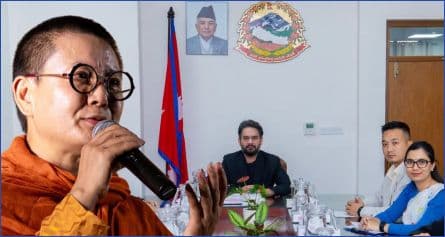
On 16 October 2026, the Government of Nepal, led by Prime Minister Balen Shah, decided to appoint Ani Choying Drolma, the renowned Buddhist nun, singer and social worker, as Vice-Chairperson of the Lumbini Development Trust for a five-year term. The decision, taken on the proposal of the Ministry of Culture, Tourism and Civil Aviation, has created an opportunity to provide renewed momentum to the preservation, management and development of Lumbini. Under the applicable regulations, the Vice-Chairperson also serves as the Trust’s chief administrative officer, making this position particularly significant in terms of institutional leadership, governance and performance.
I extend my sincere gratitude to the Government of Nepal under the leadership of Prime Minister Balen Shah. Entrusting such an important responsibility to a distinguished personality who has made notable contributions to spiritual practice, cultural expression and humanitarian service is a positive decision. It creates an opportunity to connect individual distinction and social contribution with national responsibility.
In an institution as important as the Lumbini Development Trust, leadership selection must give due priority to merit, integrity, strategic vision, administrative competence and a commitment to service. The success of a public institution does not depend solely on the stature or reputation of its leadership. Its true effectiveness is determined by the capacity to fulfil institutional objectives, uphold transparency and ensure public accountability.
The appointment of Ani Choying Drolma may therefore be regarded as an opportunity to enhance Lumbini’s cultural standing, bring experience in humanitarian service to bear on the public interest, and further strengthen Nepal’s national prestige.
2. Lumbini: Nepal’s National Pride and a Shared Spiritual Heritage of Humanity
Lumbini, the birthplace of Siddhartha Gautama, occupies a distinctive place in the spiritual and cultural history of human civilisation. The teachings of the Buddha have conveyed messages of compassion, non-violence, wisdom, peace and coexistence to people across the world. For millions of Buddhists, Lumbini is a sacred centre of faith, meditation, spiritual practice and pilgrimage. For Nepal, it is an invaluable cultural treasure, a source of national pride and a historic legacy that must be safeguarded and transmitted to future generations.
As a site inscribed on the UNESCO World Heritage List, Lumbini requires a long-term and integrated vision for its preservation. The conservation of archaeological heritage, environmental protection, sustainable tourism, infrastructure development, research and cultural cooperation must advance in a balanced and mutually reinforcing manner. The responsibilities of the Lumbini Development Trust are also connected with the preservation and development of other important sites associated with the historical life and legacy of the Buddha, including Tilaurakot, Devdaha and Ramgram.
The success of Lumbini cannot be measured solely by the construction of physical infrastructure or the number of visitors it attracts. The preservation of historical remains, continuity of religious and cultural dignity, environmental protection, administrative effectiveness and the quality of services provided to visitors are equally important indicators.
Lumbini is a source of national pride for Nepal. Its spiritual message transcends geographical boundaries and brings human communities together. Nepal must therefore demonstrate wisdom, foresight, integrity and responsibility in preserving and developing this sacred land.
Preserving Lumbini is not merely an expression of respect for the birthplace of the Buddha; it is also a commitment to translating the principles of compassion and peace into practical action.
3. Leadership Must Be Determined by Merit and Competence, Not Geography
The appointment of Ani Choying Drolma underscores the importance of merit, competence and regional inclusivity in public leadership. When selecting individuals to lead important institutions, priority should be accorded to qualifications, experience, integrity, social contribution and the capacity to discharge responsibilities effectively, rather than to a person’s place of birth.
Lumbini is situated within the sovereign territory of Nepal. Its preservation and development must be undertaken in accordance with Nepal’s sovereignty, laws, national interests and institutional arrangements. At the same time, its spiritual significance extends far beyond the boundaries of any municipality, district or province. Lumbini holds profound importance for Buddhists throughout the world and for all those who believe in peace, humanity and spiritual awareness.
Accordingly, the leadership of the Lumbini Development Trust should be assessed on the basis of role-specific competence, administrative effectiveness, ethical conduct, understanding of cultural heritage and the ability to collaborate constructively with local communities, rather than on geographical origin or regional background.
A person’s birthplace does not determine the limits of their contribution to the nation. Individuals born in any part of the country can fulfil national responsibilities through their competence, experience and commitment to public service. This principle of equal opportunity and merit-based selection must remain central to appointments to public office.
Citizens have a democratic right to raise questions, offer recommendations and demand public accountability regarding appointments. Such questions should be addressed on the basis of facts, applicable legal provisions and measurable performance. Prioritising competence and public contribution over regional identity can strengthen institutional credibility and public confidence.
The appointment of Ani Choying Drolma should therefore be evaluated in light of her experience, humanitarian service, cultural contributions and the tangible results she achieves in the discharge of her official responsibilities.
4. From Childhood in Kathmandu to a Life of Spiritual Practice
Ani Choying Drolma’s full name is Choying Dolma Lama Moktan. She was born in Boudha, Kathmandu, Nepal. The Kathmandu Post identifies her birth year as 1970, while her official website gives 1971.
At the age of 13, she entered Nagi Gompa in Shivapuri, where she received spiritual instruction under the guidance of the Buddhist master Tulku Urgyen Rinpoche. Buddhist meditation, the recitation of mantras, religious ceremonies and traditional spiritual practices became important dimensions of her life. Her musical talent, nurtured alongside her spiritual discipline, subsequently provided her with a distinctive opportunity to bring Nepal’s cultural identity and Buddhist spiritual traditions to a wider audience.
Her life journey illustrates how personal experience, discipline and a commitment to service can shape an individual’s contribution to society. The discipline cultivated through spiritual practice became an important aspect of her character. Music, in turn, provided a means of connecting with people from diverse linguistic, cultural and social backgrounds.
Education and knowledge take many forms. Formal academic qualifications are essential for numerous professional responsibilities. At the same time, spiritual study, practical experience, cultural knowledge and sustained engagement with communities can also contribute significantly to an individual’s capabilities. In selecting individuals for public responsibilities, these dimensions should be assessed appropriately in accordance with the requirements of the position.
The life of Ani Choying Drolma offers an inspiring example of how spiritual discipline, music and a commitment to service can be brought together to make a positive contribution to society.
5. A Voice That Introduced Nepal’s Spiritual Heritage to the World
The musical journey of Ani Choying Drolma took a new direction after American guitarist and musician Steve Tibbetts recognised her singing talent. Her first album, Cho, was released internationally in 1997. The album made an important contribution to introducing her devotional music to audiences beyond Nepal. Through subsequent musical performances and albums, Himalayan Buddhist mantras, traditional religious music and Nepali cultural expression gained wider recognition.
Within Nepal, she is also widely known for the song Phoolko Aankhama Phoolai Sansar. The song conveys messages of positive thinking, empathy, goodwill and respect for others.
Music is a powerful medium for connecting people across linguistic and cultural boundaries. Traditional mantras, devotional melodies and songs conveying messages of compassion can establish meaningful emotional connections among people from diverse backgrounds. Ani Choying Drolma’s musical career has contributed to bringing Nepal’s cultural heritage and spiritual traditions to a broad international audience.
This role of cultural expression is also relevant to the future of Lumbini. The preservation of a sacred heritage site requires archaeological research, historical evidence and competent administration. It also requires an environment in which visitors can understand the messages of compassion, peace and humanity associated with the teachings of the Buddha.
In this respect, music is not confined to entertainment or artistic expression. It can foster cultural understanding, encourage reflection and renew awareness of the shared values that have connected human communities across generations.
6. Humanitarian Service Beyond the Musical Stage
The contribution of Ani Choying Drolma extends well beyond music. According to her official biography, the Nuns' Welfare Foundation was established in 1998 and Arya Tara School in 2000. These initiatives have contributed to the promotion of education and welfare, particularly for Buddhist nuns and girls. In 2010, she established the Aarogya Foundation with the objective of expanding access to kidney-related treatment and dialysis services.
Her associated social-service initiatives have also included access to safe drinking water, early childhood care, educational scholarships, support for women's entrepreneurship and relief assistance to citizens affected by Nepal’s devastating earthquake in 2015.
These initiatives demonstrate the practical meaning of compassion. Compassion is not merely an emotion expressed through words. Its true significance becomes evident through actions that improve access to education and healthcare, uphold human dignity and bring positive change to the lives of people living in vulnerable circumstances.
When music, cultural programmes, albums, donations and the participation of supporters are connected with social service, humanitarian initiatives can acquire greater reach and effectiveness. Such efforts can establish a constructive relationship between cultural identity and social responsibility.
Ani Choying Drolma’s commitment to service offers encouragement for sustained contributions to education, healthcare and humanitarian assistance. Systematic documentation and the public disclosure of relevant programme information would further help present the scope and significance of these contributions clearly.
7. Humanitarian Assistance Exceeding NPR 150 Million During Times of Crisis
Ani Choying Drolma has made notable contributions during various disasters and humanitarian emergencies in Nepal. She has provided assistance exceeding NPR 150 million across different areas of humanitarian service. This contribution is associated with efforts to deliver relief to disaster-affected citizens, support economically vulnerable families, expand educational opportunities for children and facilitate access to healthcare.
Following Nepal’s devastating earthquake in 2015, she played an important role in providing food, medicines, tents, warm clothing and other essential supplies to affected citizens. In particular, efforts to deliver relief and necessary assistance to affected families living in remote areas helped provide support to people facing exceptionally difficult circumstances.
Scholarship programmes were also introduced to help children affected by the earthquake and those from economically disadvantaged backgrounds continue their education. Initiated in 2016, these programmes sought to assist children whose education had been disrupted by the disaster, as well as students living in conditions of poverty.
Assistance provided during the COVID-19 pandemic and to communities affected by floods in the Bhotekoshi, Rasuwa and Rushi Khola areas further demonstrates the importance of humanitarian service. During emergencies, the timely provision of food, healthcare supplies, safe shelter and other essential assistance can play a significant role in improving the circumstances of affected citizens.
Humanitarian assistance exceeding NPR 150 million demonstrates the importance of translating social responsibility, compassion and philanthropy into practical action. Providing timely support to people affected by disasters, protecting children’s access to education and expanding access to medical treatment are meaningful expressions of social responsibility.
Ani Choying Drolma’s humanitarian work conveys an important message: public life and personal achievement are not defined by fame and prestige alone. Standing alongside people in distress, supporting those in need and fulfilling one’s responsibilities towards society are equally important dimensions of meaningful public contribution.
8. Education, Healthcare and the Human Dignity of Vulnerable Communities
The significance of Ani Choying Drolma’s humanitarian work is not confined to the number of projects associated with her. It is also reflected in the social needs these initiatives seek to address.
Education enables children and young people to develop their abilities, become self-reliant and build their futures. Healthcare provides families with access to treatment and helps reduce physical suffering and financial hardship. Early childhood care can help working mothers balance employment with family responsibilities. Support for women's entrepreneurship can expand economic participation and strengthen financial independence.
The work associated with the Aarogya Foundation in kidney treatment and dialysis services represents an important example of the relationship between healthcare and human dignity. Serious illness can impose physical, emotional and financial burdens on patients and their families. Expanding access to appropriate treatment is therefore an important objective of social service.
Initiatives that provide educational opportunities to girls and Buddhist nuns can expand access to knowledge, professional development and participation in public life. Improved access to education can also strengthen individual confidence, capabilities and social participation.
For such programmes to deliver meaningful and lasting benefits, they must be supported by financial sustainability, transparency and a clear understanding of the needs of the communities they seek to serve. The fundamental purpose of humanitarian service is to bring positive change to people's lives. Contributions to education, healthcare and social protection can help create a more just, inclusive and humane society.
9. Strategic Vision, Professional Management and Accountable Leadership for Lumbini
The appointment of Ani Choying Drolma has created an opportunity to strengthen the effectiveness of the Lumbini Development Trust. It also carries the important responsibility of advancing Lumbini’s development in an orderly and sustainable manner while safeguarding its historical, cultural and spiritual significance.
The leadership of the Trust must maintain an appropriate balance between heritage conservation and infrastructure development, the management of pilgrims and environmental protection, as well as national responsibilities and cooperation with relevant stakeholders.
First, archaeological and historical sites must be preserved through evidence-based research, professional expertise and effective monitoring.
Second, development projects must be transparent, financially responsible and consistent with the cultural and historical significance of the site.
Third, pilgrims, visitors and local communities must have access to well-managed facilities, clear information, sanitation, environmental protection and respectful public services.
Fourth, the Trust should strengthen cooperation with archaeologists, historians, heritage conservation specialists, Buddhist institutions, local governments, community representatives and other relevant organisations.
Fifth, administrative decisions must be grounded in law, transparent procedures, clearly defined objectives and regular public reporting.
Sixth, the development of Lumbini must contribute to improving the livelihoods of surrounding communities while safeguarding the authenticity and integrity of the sacred landscape.
Leadership by a distinguished personality with a record of cultural and humanitarian contributions can create new opportunities for constructive cooperation. Nevertheless, institutional success depends on effective decision-making, a competent administrative team, the participation of local communities and the responsible use of public resources.
The success of the new leadership must be assessed through measurable outcomes in heritage preservation, the quality of public services, administrative transparency and the benefits delivered to local communities. If Lumbini’s development proceeds in a manner that safeguards its dignity and significance, it can further enhance Nepal’s national standing.
10. A National Vision for a National Institution
The preservation of Lumbini should not be treated as the exclusive responsibility of any particular region or as a subject of regional competition. It is a national responsibility of Nepal. Its fulfilment requires cooperation among the country’s different provinces, communities, institutions and professional sectors.
Local participation is a foundation of Lumbini’s sustainable development. Citizens living in and around Lumbini have legitimate interests in employment, infrastructure, environmental protection, cultural preservation and the economic opportunities generated by pilgrimage and tourism. Effective mechanisms must be in place to listen to their voices, incorporate their recommendations and address their needs.
At the same time, the preservation of a heritage site of global spiritual significance requires a broader perspective. Nepal must make use of relevant expertise, experience and knowledge while upholding national laws and protecting the public interest.
The question of whether a qualified individual was born in a particular municipality or district is less important than whether that person fulfils their responsibilities with integrity and competence. This principle should guide appointments to public office.
Providing opportunities to talented individuals from different parts of the country is a means of strengthening national institutions. Fair criteria, capable leadership and accountability for performance can enhance public trust in institutions.
National unity is not achieved by allocating every public responsibility according to geographical origin. It is built upon fairness, equal respect, shared responsibility and a collective commitment to the country’s future.
By advancing local participation alongside a coherent national vision, Nepal can further strengthen Lumbini’s cultural dignity, economic potential and spiritual significance.
11. A Constructive Message to Those Raising Questions About the Appointment
Appointments to public office are an important aspect of democratic governance. Reviewing appointment processes, raising relevant questions and demanding public accountability are essential elements of good governance and institutional integrity. Every officeholder must discharge their responsibilities in accordance with the law and strengthen public confidence through their performance.
The appointment of Ani Choying Drolma should be considered in light of her social contributions, cultural identity, spiritual practice and capacity to fulfil public responsibilities. Greater importance should be attached to qualifications, experience and commitment to service relevant to the position than to an individual's place of birth or regional background.
The responsibilities of the Lumbini Development Trust concern the preservation of historical heritage, effective management, cooperation with local communities and the responsible use of public resources. Fulfilling these responsibilities requires administrative competence, transparency, professional expertise and a clearly defined plan of action.
Providing Ani Choying Drolma with the opportunity to discharge her responsibilities effectively is a constructive approach. If her experience and commitment to service are utilised in accordance with the Trust’s institutional objectives, they may contribute positively to Lumbini’s preservation and development.
The ultimate measure of the appointment’s success will be performance. Relations with local communities, the administrative transparency of the Trust, the protection of heritage and the quality of public services will demonstrate the effectiveness of its leadership.
In a democratic society, criticism and recommendations should be regarded as opportunities for institutional improvement. Evidence-based, constructive criticism focused on the public interest strengthens institutions. Equally, it is important to recognise positive contributions while ensuring that the discharge of public responsibilities is assessed fairly and objectively.
The appointment of Ani Choying Drolma can be viewed as an opportunity to cooperate in pursuit of a shared national objective. The achievement of tangible results in enhancing Lumbini’s dignity, management and preservation through the effective discharge of her responsibilities will constitute the appointment’s genuine success.
12. Sincere Appreciation to the Government of Nepal
The appointment of Ani Choying Drolma as Vice-Chairperson of the Lumbini Development Trust has highlighted opportunities for cooperation among cultural heritage preservation, spiritual awareness and humanitarian service in Nepal. In assigning responsibilities of this nature, it is important to maintain an appropriate balance between an individual’s qualifications, experience, social contributions and the institutional requirements of the position.
I express my sincere appreciation to the Government of Nepal, led by Prime Minister Balen Shah, for this decision. It creates an opportunity to strengthen the preservation and management of Lumbini, recognise cultural identity and utilise experience gained through humanitarian service in the furtherance of the public interest.
Respecting positive government decisions while ensuring their effective implementation is a shared responsibility of citizens and institutional leadership. Transparency, adherence to legal procedures and results-oriented performance can further strengthen public confidence in public institutions.
If Ani Choying Drolma can effectively apply her experience, commitment and dedication to service to the preservation and development of Lumbini, the significance of this appointment will be further enhanced. Achieving this objective requires constructive cooperation among the Government, the Trust’s administration, local communities, experts and other stakeholders.
Lumbini is an important symbol of Nepal’s national pride and cultural identity. The Government’s attention to its preservation and development, together with the role of institutional leadership, should be advanced in a constructive and forward-looking manner. Through such efforts, Nepal can safeguard the dignity of the birthplace of the Buddha while translating the messages of peace, compassion and humanity into practical action.
13. Personal Reflections on Compassion and Public Service
The true value of human life cannot be determined solely by an individual’s fame, position or prestige. The ability to understand the suffering of others, the willingness to provide assistance in difficult circumstances, a sense of responsibility towards society and the capacity to bring positive change to other people’s lives are what make an individual’s contribution meaningful.
Ani Choying Drolma’s musical journey and humanitarian service have highlighted the importance of compassion, discipline and social responsibility. The spiritual practice, cultural contributions and social-service initiatives associated with her life offer an inspiring example of how personal experience can be applied in the service of the public good.
Public office is not merely a means of enhancing personal prestige. It is a responsibility grounded in citizens’ trust, legal obligations and the duty to fulfil institutional objectives. A commitment to service must be accompanied by professional competence, transparency, impartiality and results-oriented performance if public leadership is to be effective.
The leadership entrusted with the preservation of Lumbini should reflect the values associated with the teachings of the Buddha, including compassion, non-violence, wisdom and respect for human dignity, through institutional conduct. These values must be demonstrated not merely in speeches, but also in administrative decisions, the use of public resources, engagement with local communities and the practical work of heritage preservation.
In my view, the greatest achievement of public service is realised when an institution earns the trust of citizens, effectively safeguards cultural heritage and leaves a positive legacy for future generations.
Compassion must find expression in action, peace in coexistence, and humanity in service. By embracing these values, we can collectively strengthen Lumbini as a source of national pride for Nepal and a shared source of inspiration for humanity.
14. Conclusion: Let Us Make Lumbini a Living Example of Peace
Lumbini is more than the birthplace of Gautama Buddha. It is a sacred land that reminds humanity of the enduring importance of compassion, peace, self-reflection and human dignity. Its preservation is a matter of national pride for Nepal and a shared responsibility for the global community because of its cultural and spiritual significance.
The appointment of Ani Choying Drolma as Vice-Chairperson of the Lumbini Development Trust has created new possibilities and expectations. If the experience associated with her spiritual practice, musical career and humanitarian service is utilised in accordance with the institution’s objectives, it may contribute positively to Lumbini’s preservation and development. The success of this appointment must be demonstrated through performance, institutional transparency, compliance with the law, cooperation with local communities and measurable achievements in heritage conservation.
Public discourse concerning the appointment should proceed on the basis of facts, reasoned argument and the public interest. Impartial assessment of merit, public accountability and constructive recommendations strengthen institutions. Giving priority to competence, integrity and commitment to the public good over an individual’s birthplace or regional identity is both fair and appropriate.
Nepal has the opportunity to establish Lumbini as an exemplary model of cultural heritage preservation, well-managed development, responsible tourism and humanitarian service. Achieving this vision requires the shared commitment of the Government, local communities, experts, religious institutions and civil society.
The true dignity of Lumbini lies not merely in its physical structures, but also in the message it conveys to humanity. When compassion is translated into action, peace is reflected in coexistence, and humanity is expressed through service, the significance of Lumbini becomes even more profound.
Krishna Bahadur Tamang
Chairperson, Himalayan Indigenous Peace Foundation
Editor, Samadesh Weekly
Social Activist and Road Safety Campaigner
Everest Floriculture House
Ward No. 1, Gokarneshwor Municipality, Kathmandu, Nepal
Telephone: 9851033578
Date: 22 October 2026